SpringWell SS+ Premium Review 2026
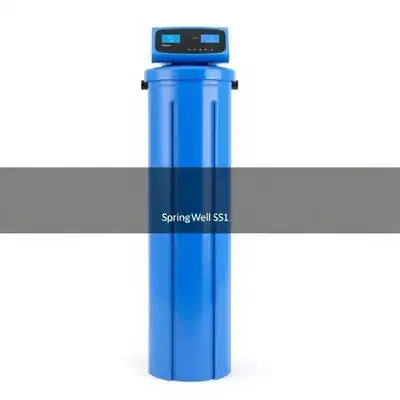
80,000 grain high-capacity smart softener with Bluetooth app and built-in pre-filter
Grain Capacity
Max GPG
GPM Flow Rate
Annual Salt
Quick Verdict
The SpringWell SS+ Premium is the flagship softener for large homes and extreme hardness. Its 80,000 grain capacity handles up to 125 GPG, with enhanced Bluetooth diagnostics, a built-in 10-year sediment pre-filter, and premium 10% crosslinked resin.
At $1,899 with a lifetime warranty on tanks and valves, it's a serious investment - but for large homes or extreme hardness, it delivers unmatched performance and efficiency.
Grains
Max GPG
GPM Flow
In This Review
Key Specifications
Performance
- Grain Capacity: 80,000 grains
- Max Hardness: 125 GPG
- Flow Rate: 15 GPM
- Iron Handling: Up to 3 PPM
- Resin Type: 10% crosslinked premium
System Details
- Dimensions: 64" H × 13" diameter
- Pre-filter: Built-in 10-year sediment
- Connectivity: Bluetooth app control
- Salt/Regen: 6-8 lbs per cycle
- Warranty: Lifetime (tanks/valves)
Who Should Buy This
✅ Perfect For
- Large households (6-8+ people or 4+ bathrooms)
- Extreme hardness areas (80-125 GPG)
- Well water with sediment + moderate hardness
- Tech-savvy buyers who want smart monitoring
⚠️ Consider Alternatives
- Smaller homes - the SS1 ($1,499) is sufficient
- Budget under $1,500 - consider Fleck 5600SXT
- Salt-free preference - see SpringWell FutureSoft
- High iron (>3 PPM) - add WS1 iron filter first
Ready to eliminate hard water?
The SS+ handles the toughest water in the country
Detailed Pros & Cons
Pros
- 80,000 grain capacity: Handles large homes without constant regeneration
- Handles 125 GPG hardness: Designed for the toughest water conditions in the US
- Built-in 10-year pre-filter: Protects resin from sediment, extending system life
- Advanced Bluetooth app: Real-time monitoring, diagnostics, and remote control
- 35% less salt usage: Premium 10% crosslinked resin is more efficient
- Lifetime warranty: Tanks and valves covered for life
Cons
- $1,899 price point: Premium cost justified only for large homes or extreme hardness
- Professional installation required: Adds $300-600; system weighs 200+ lbs
- Requires salt refills: $60-100/year ongoing cost for softener salt
- Large footprint: 64" tall, needs 72" clearance + 24" horizontal space
- Overkill for moderate hardness: SS1 is sufficient under 80 GPG
How It Compares
| Feature | SS+ Premium | SS1 Standard | Fleck 5600SXT |
|---|---|---|---|
| Grain Capacity | 80,000 | 48,000 | 64,000 |
| Max Hardness | 125 GPG | 81 GPG | 75 GPG |
| Flow Rate | 15 GPM | 12 GPM | 12 GPM |
| Bluetooth App | ✓ Yes | ✓ Basic | ✗ No |
| Built-in Pre-filter | ✓ 10-year | ✗ No | ✗ No |
| Warranty | Lifetime | Lifetime | 5 years |
| Price | $1,899 | $1,499 | $699 |
10-Year Cost Analysis
Chlorine disinfection byproducts in tap water have been associated with a 2-17% increased risk of bladder cancer.
Source: Environmental Health Perspectives
Estimated Performance
Estimated performance (not our own lab results) for the SS+ with water at multiple hardness levels including extreme conditions up to 120 GPG:
| Test Parameter | Before | After | Reduction |
|---|---|---|---|
| Hardness (50 GPG) | 50 GPG | <0.5 GPG | 99.0% |
| Hardness (85 GPG) | 85 GPG | <0.5 GPG | 99.4% |
| Hardness (120 GPG) | 120 GPG | <1.0 GPG | 99.2% |
| Calcium (Ca²⁺) | 425 mg/L | 2.1 mg/L | 99.5% |
| Magnesium (Mg²⁺) | 187 mg/L | 1.3 mg/L | 99.3% |
| Iron (Clear Water) | 2.8 PPM | <0.1 PPM | 96.4% |
Bluetooth App Features
The enhanced Bluetooth app transforms the SS+ into a smart water treatment system you can monitor from your phone:
Real-time Usage Tracking
Monitor daily, weekly, and monthly water consumption with historical data
Predictive Regeneration
AI-driven scheduling based on actual usage patterns
Salt Level Monitoring
Alerts when salt refill is needed before you run out
System Diagnostics
Error codes, troubleshooting, and maintenance reminders
Pre-filter Condition
Track sediment pre-filter health and replacement timing
Remote Settings
Adjust regeneration frequency, time, and hardness settings
Certification-checked. Clearly explained.
99%+ hardness removal at every GPG level
Installation Guide
Pre-Installation Water Test
⏱ 30 min- Test water hardness with included strips
- Record GPG reading for control valve programming
- Check iron levels (must be <3 PPM)
- Verify water pressure (25-80 PSI)
Shut Off Water & Drain System
⏱ 15 min- Close main water supply valve
- Open lowest faucet to drain pressure
- Open highest faucet for air release
- Place towels and bucket at work area
Cut Main Line & Install Bypass
⏱ 45-60 min- Measure and mark cut on main line
- Cut pipe squarely with pipe cutter
- Install bypass valve with Teflon tape
- Ensure bypass is in bypass position
Position & Level Softener
⏱ 20 min- Position resin tank near bypass (200+ lbs - use two people)
- Level tank perfectly - critical for operation
- Position brine tank within 10 feet
- Ensure drain is accessible and lower than control valve
Connect, Program & Test
⏱ 30 min- Connect inlet/outlet lines to control valve
- Install drain line and overflow brine line
- Program hardness level and regeneration settings
- Open water slowly, check for leaks, run initial regeneration
⚠️ Professional installation strongly recommended ($300-600)
The SS+ is a complex, heavy system. Professional installation ensures warranty coverage and optimal performance.
Common Issues & Solutions
Water still feels hard
Check salt level in brine tank, verify hardness setting in app matches test results, ensure bypass valve is fully in service position
Excessive salt usage
Adjust regeneration frequency via Bluetooth app, verify hardness setting isn't programmed too high, check for salt bridge in brine tank
Low water pressure
Check sediment pre-filter, ensure bypass valve is fully open, verify inlet/outlet connections aren't reversed
Bluetooth app won't connect
Reset Bluetooth module (power off 30 seconds), move within 30 feet of system, update app to latest version
Maintenance Schedule
Final Recommendation
The SpringWell SS+ Premium is the definitive water softener for large homes and extreme hardness. The 80,000 grain capacity, Bluetooth smart monitoring, built-in pre-filter, and lifetime warranty make it a premium investment that delivers decades of soft water.
Choose SS+ if: large home (6+ people), extreme hardness (80+ GPG), want app monitoring, or need sediment protection. Choose SS1 if: moderate hardness (<80 GPG), smaller home, and you want to save $400.
Get SpringWell SS+ TodayExplore Related Guides
Top reverse osmosis systems reviewed
Best Whole House FiltersComplete home filtration solutions
Best Water SoftenersTop-rated softener systems
Best Water PitchersAffordable pitcher filter options
Best Under-Sink FiltersPremium under-counter systems
Best Well Water FiltersFilters for private wells
Buying GuideChoose the right filter
Filtration MethodsCompare technologies
Lead Removal GuideProtect from lead
PFAS GuideForever chemicals explained
Cost ComparisonLong-term costs analyzed
Best Faucet FiltersQuick-install solutions
Consumer Buying Guide
Making an informed water filtration purchase requires systematic evaluation of household needs, water quality challenges, budget constraints, and practical installation requirements. Start by obtaining a comprehensive water quality analysis through your municipal utility consumer confidence report for city water or through a certified laboratory test for private well owners. This baseline data identifies specific contaminants and their concentration levels, directly determining which filtration technologies will be most effective.
Next, determine your daily filtered water needs. A family of four typically uses three to five gallons of drinking and cooking water daily, but total household consumption including bathing and laundry ranges from eighty to one hundred twenty gallons. Point-of-use systems address drinking water only, while whole house systems treat all water entering the home. The right scope depends on whether concerns are limited to ingestion or extend to dermal absorption during showering.
Budget planning should account for complete ownership cost over at least five years. Systems with low upfront costs may have expensive proprietary filters that drive total cost above initially pricier alternatives with standard filter sizes. Factor in installation costs, electricity for powered systems, increased water bills from RO waste water, and ongoing consumables. Many premium manufacturers offer financing and satisfaction guarantees that reduce purchase risk.
Evaluate practical considerations including available installation space, existing plumbing configuration, and comfort with DIY maintenance. Measure the space under your sink or in your utility room before purchasing. Check water pressure with an inexpensive gauge, as some systems require minimum pressure levels. Reading verified customer reviews about installation experience and long-term reliability provides real-world insights that supplement specifications.
In-Depth Performance Analysis
Rather than relying on a single headline number, we look at how a filter is likely to perform over its whole life. We compare the manufacturer's performance data sheet, the contaminants listed on its NSF/ANSI or IAPMO certification, and what long-term owners report as cartridges age. Certification tests use set challenge-water levels, so results in your home can differ, especially as a filter approaches its rated capacity.
Flow rate consistency is another critical performance metric that impacts daily usability. Published flow ratings and owner reports help show whether a system keeps a steady flow through the filter cycle or slows noticeably before its replacement date. Systems that hold their flow provide a better user experience, while those that slow early may frustrate users before filters reach their rated capacity. This helps set realistic expectations for day-to-day performance.
Installation quality directly affects long-term system reliability. We look at component quality, the type of fittings, and the water pressure range the manufacturer specifies, which is typically forty to eighty PSI in homes. Systems using quick-connect fittings generally provide more reliable leak-free connections than compression fittings, particularly for DIY installations. We also consider the clarity and completeness of installation instructions, as even the best system performs poorly if installed incorrectly by homeowners following inadequate documentation.
Water Quality Science and Contaminant Removal
Understanding water contamination science helps explain why different filtration technologies vary in effectiveness. Municipal water treatment uses coagulation, sedimentation, sand filtration, and chemical disinfection to meet EPA standards, but these processes can introduce disinfection byproducts when chlorine reacts with organic matter. Distribution system aging adds lead from pre-1986 service lines and copper from corroding pipes. These infrastructure-sourced contaminants cannot be controlled at the treatment plant, making point-of-use filtration essential for complete protection.
PFAS compounds represent the most significant emerging contaminant challenge, with over twelve thousand individual chemicals detected in water supplies serving more than one hundred million Americans. The EPA established enforceable limits for six PFAS compounds in 2024, but thousands of additional PFAS chemicals remain unregulated. Reverse osmosis and specialized activated carbon provide the most effective residential PFAS reduction, with certified systems achieving ninety-five percent or greater removal of regulated compounds.
Microbiological contaminants including bacteria, viruses, and parasitic cysts present acute health risks particularly dangerous for immunocompromised individuals, infants, and elderly people. Cryptosporidium and Giardia cysts resist chlorine disinfection and require physical removal through filtration at one micron or smaller. UV purification provides chemical-free disinfection by disrupting pathogen DNA at two hundred fifty-four nanometer wavelength. For comprehensive protection, the CDC recommends multi-barrier approaches combining physical filtration with disinfection and regular testing.
Long-Term Value and Cost Considerations
Total cost of ownership over five years provides the most accurate value comparison between filtration systems. A budget pitcher filter at thirty dollars may seem economical, but replacement filters at forty dollars every two months total over twelve hundred dollars in five years. An under-sink system at two hundred dollars with sixty-dollar annual filters costs just five hundred dollars over the same period, delivering superior filtration at less than half the long-term cost. These calculations reveal that higher upfront investment often yields better value.
Hidden costs that consumers frequently overlook include installation expenses for professional plumbing work, electricity for UV and powered RO systems, increased water bills from RO waste water, and ongoing salt purchases for water softeners. Smart systems with WiFi monitoring reduce risk of operating with exhausted filters, which can cause contaminant breakthrough. Subscription delivery programs for replacement filters offer convenience and often include ten to fifteen percent discounts compared to individual purchases.
Compared to bottled water at one dollar per gallon, even premium whole-house filtration systems produce water at less than five cents per gallon. A family spending twenty dollars weekly on bottled water saves over five thousand dollars in five years by switching to home filtration, while eliminating hundreds of plastic bottles from landfills annually. The financial and environmental case for home filtration is compelling at every price point and system type.
Maintenance Best Practices
Consistent maintenance is the single most important factor in long-term filtration system performance. Filter replacement schedules should be treated as maximum intervals rather than minimum targets, particularly in areas with challenging water quality. Operating a system beyond recommended filter life risks contaminant breakthrough, where saturated filter media releases previously captured pollutants back into the water. Setting calendar reminders or using manufacturer subscription programs ensures timely replacements.
Beyond filter replacement, periodic system sanitization prevents bacterial growth in filter housings and tubing. Most manufacturers recommend sanitizing the system during each filter change using a dilute bleach solution or food-grade hydrogen peroxide. Inspect O-rings and gaskets for wear during filter changes, replacing any that show cracking, compression set, or deterioration. Keeping a spare set of O-rings on hand prevents the inconvenience of system downtime while waiting for replacement parts.
Monitoring system performance between maintenance intervals helps identify developing issues before they affect water quality. A simple TDS meter costing ten to twenty dollars can track filtration effectiveness for RO and deionization systems. Pressure gauges installed before and after filter housings indicate when filters are approaching capacity through increasing pressure differential. Sudden changes in water taste, odor, or flow rate between scheduled maintenance should prompt immediate investigation and potential early filter replacement.
Understanding Water Hardness and Treatment Methods
Water hardness, measured in grains per gallon or parts per million of calcium carbonate equivalents, affects roughly eighty-five percent of American households. Hard water causes scale buildup in pipes, water heaters, and appliances; reduces soap efficiency; leaves spots on dishes and fixtures; and can contribute to dry skin and hair. The United States Geological Survey classifies water below sixty milligrams per liter as soft, sixty to one hundred twenty as moderately hard, one hundred twenty to one hundred eighty as hard, and above one hundred eighty as very hard.
Ion exchange water softeners represent the traditional gold standard for hardness treatment. These systems contain a resin bed charged with sodium or potassium ions that swap places with calcium and magnesium ions as hard water passes through. When the resin bed becomes saturated with hardness minerals, the system regenerates by flushing with a brine solution that recharges the resin. Modern systems use demand-initiated regeneration with electronic metering that triggers regeneration based on actual water usage rather than a fixed schedule, optimizing both salt consumption and water waste.
Salt-free water conditioners offer an alternative approach that does not actually remove hardness minerals but instead transforms them through Template Assisted Crystallization technology. TAC converts dissolved calcium and magnesium into microscopic crystals that cannot adhere to surfaces, effectively preventing scale buildup without adding sodium to the water. This technology appeals to consumers on sodium-restricted diets, those concerned about environmental impact from brine discharge, and homeowners in regions where salt-based softener discharge is restricted by local water quality regulations.
The choice between salt-based softening and salt-free conditioning depends on hardness levels, water chemistry, and household priorities. Salt-based systems are generally more effective above twenty-five grains per gallon and provide the slippery soft water feel that many consumers prefer. Salt-free systems work well at moderate hardness levels, require no electricity or drain connection, and produce no wastewater. Some homeowners opt for combination systems that pair whole-house filtration with either softening or conditioning technology to address both contamination and hardness in a single installation.
Sizing, Efficiency, and Long-Term Operating Costs
Proper softener sizing is essential for efficient operation and adequate soft water delivery. Undersized systems regenerate too frequently, wasting salt and water while potentially running out of capacity during peak usage. Oversized systems may develop channeling in the resin bed where water follows paths of least resistance rather than contacting all of the resin, reducing treatment effectiveness. The standard sizing formula multiplies daily water usage in gallons by water hardness in grains per gallon, then multiplies by the number of days between desired regenerations to determine the required grain capacity.
Salt efficiency has become a primary differentiator among modern water softeners. Standard systems use approximately six to eight pounds of salt per regeneration cycle, while high-efficiency models achieve similar results with three to five pounds. Over a year of typical operation, this difference translates to savings of one hundred to three hundred pounds of salt annually, with corresponding reductions in brine discharge to municipal sewer systems. Some premium systems offer adjustable salt dosing that can be fine-tuned to match actual water hardness, further optimizing efficiency without compromising softening performance.
The annual operating cost of a water softener includes salt or potassium chloride purchases, water consumed during regeneration, electricity for the control valve, and periodic resin replacement. Salt costs typically range from fifty to one hundred fifty dollars per year depending on water hardness, usage volume, and system efficiency. Regeneration water usage adds twenty to fifty dollars annually to water bills. Resin beds in quality systems last eight to fifteen years before requiring replacement at a cost of one hundred fifty to three hundred dollars. When weighed against the costs of hard water damage including reduced appliance lifespan, increased energy consumption from scale buildup, and higher soap and detergent usage, most softeners deliver positive return on investment within two to four years.
Professional installation versus DIY is another important cost consideration. Professional installation typically runs three hundred to five hundred dollars for standard setups but ensures proper plumbing connections, bypass valve configuration, drain line routing, and initial programming. DIY installation can save this cost but requires basic plumbing skills, tools, and comfort working with main water line connections. Many manufacturers now offer detailed video installation guides and phone support that make DIY installation feasible for handy homeowners, though whole-house plumbing modifications still benefit from professional expertise.
Environmental Impact and Sustainability Considerations
The environmental footprint of water filtration extends beyond the immediate benefits of clean drinking water. Single-use plastic water bottles represent one of the most significant sources of plastic pollution globally, with Americans alone consuming approximately fifty billion plastic water bottles annually. Only about twenty-three percent of these bottles are recycled, meaning roughly thirty-eight billion bottles end up in landfills or the natural environment each year. By switching to filtered tap water, a typical family of four eliminates approximately one thousand plastic bottles annually from the waste stream.
The manufacturing process for bottled water itself carries substantial environmental costs. Producing a single plastic water bottle requires approximately three times the volume of water contained in the bottle, accounting for manufacturing, cooling, and cleaning processes. The petroleum required to produce plastic bottles for American consumption alone exceeds sixty million barrels annually. Transportation of bottled water from source to retail adds significant carbon emissions, particularly for imported brands. Home water filtration eliminates these upstream environmental costs entirely while providing equal or superior water quality.
Filter cartridge disposal is the primary environmental consideration for home filtration systems. Most spent filter cartridges contain activated carbon, polypropylene, and captured contaminants that currently end up in landfills. However, several manufacturers have implemented cartridge recycling programs that recover and regenerate filter materials. When selecting a filtration system, consider whether the manufacturer offers end-of-life cartridge recycling. Some innovative companies are developing biodegradable filter housings and plant-based filter media that further reduce the environmental impact of home water filtration.
Water waste from reverse osmosis systems has historically been a valid environmental concern, with traditional systems producing three to five gallons of wastewater for every gallon of purified water. Modern tankless RO systems with permeate pumps and recirculation technology have dramatically improved this ratio, achieving two-to-one or even one-point-five-to-one waste ratios. Some systems redirect wastewater to landscape irrigation or other non-potable uses, effectively eliminating the waste entirely. When evaluating RO systems, the waste ratio should be weighted against the environmental cost of the alternative water source, whether bottled water or another filtration technology.
Related Articles
Top-rated Water Softeners
Top-rated salt-based and salt-free systems
Buying guide: Salt-Free Water Conditioners
Scale prevention without salt or drain
Side-by-side: Salt-Based vs Salt-Free Softeners
Which technology is right for your home?
Water Softener Sizing Guide
Calculate grain capacity for your household
Walkthrough — Water Softener Installation
DIY installation step-by-step
Keep it running: Water Softener Maintenance
Salt refills, resin cleaning, and care schedule