Salt-Free Water Conditioners: Complete Guide to TAC Systems
How salt-free technology works, what it can and can't do, and whether it's right for your home
Quick Summary
Salt-free water conditioners use TAC (Template Assisted Crystallization) technology to prevent scale buildup without removing minerals or adding sodium. They're not softeners—they're conditioners that change how minerals behave in your water.
✓ Great For:
- • Moderate hardness (under 15 GPG)
- • Scale prevention on fixtures
- • Zero-maintenance preference
- • Eco-conscious homeowners
- • Sodium-restricted diets
✗ Not Ideal For:
- • Very hard water (20+ GPG)
- • Wanting "soft" water feel
- • Better soap lathering
- • Complete mineral removal
- • Existing heavy scale issues
How Salt-Free Conditioning Works (TAC Technology)
Unlike traditional ion-exchange softeners that swap calcium/magnesium for sodium, TAC systems use a catalytic process to transform dissolved hardness minerals into microscopic crystal particles.
The TAC Process Step-by-Step
Hard Water Enters
Water containing dissolved calcium and magnesium flows into the TAC tank.
Catalytic Conversion
TAC media provides nucleation sites where minerals crystallize into stable micro-crystals (aragonite form).
Crystals Release
Once crystals reach critical size, they detach from the media and flow through your plumbing.
Scale Prevention
Crystallized minerals pass through without sticking to pipes, fixtures, or appliances. No scale forms.
Important Distinction
Salt-free systems are "conditioners" not "softeners." They prevent scale but don't remove minerals. A water hardness test will still show the same GPG reading. Judge effectiveness by visible scale reduction on fixtures, not by test strips.
What Salt-Free Conditioners Do vs. Don't Do
They DO:
- Prevent new scale buildup on pipes and fixtures
- Protect water heaters from scale damage
- Require zero salt, electricity, or drain
- Retain healthy calcium and magnesium
- Work indefinitely without media replacement
- Are safe for septic systems and environment
- Help gradually reduce existing scale
They DON'T:
- Actually soften water (minerals remain)
- Create that "slippery" soft water feel
- Improve soap and shampoo lathering
- Remove existing heavy scale instantly
- Work well on very hard water (20+ GPG)
- Change water test hardness readings
- Handle iron, sulfur, or bacteria
Best Salt-Free Conditioner Brands (2026)
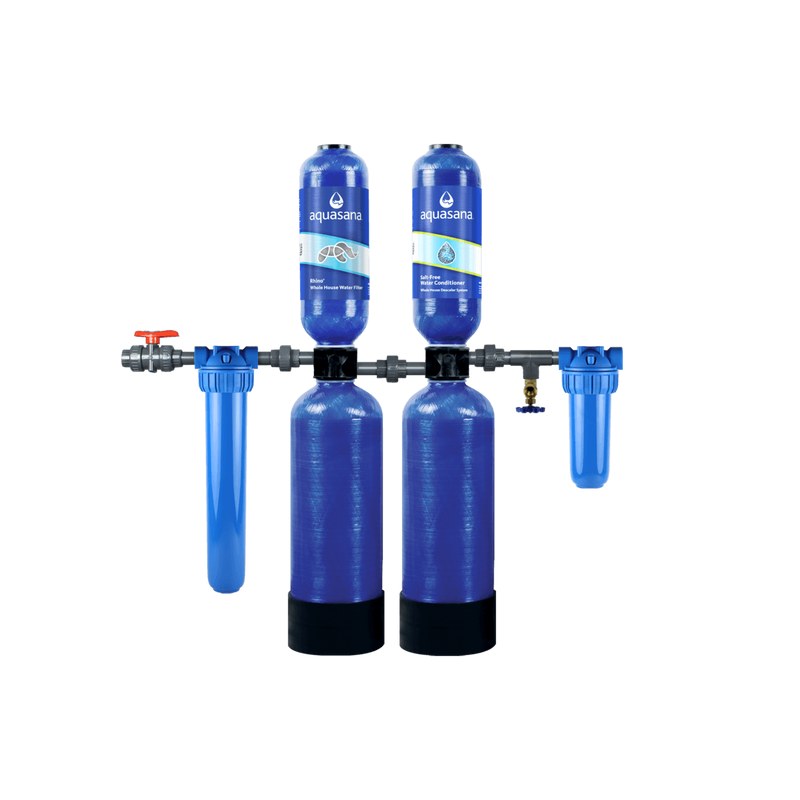
Aquasana Rhino Salt-Free Water Conditioner
Best Overall - Scale Control Without Salt
Sale price: $1,773 (prices change often)
Prevents scale on fixtures, pipes and appliances with no salt, no brine tank and no wastewater, while keeping healthy minerals in your water. Like every salt-free conditioner it does not soften water; for slippery soft water pick a salt-based softener from our best water softeners guide.
View on AmazonPelican NaturSoft NS3
Runner-Up - Proven Performance
Price: $1,400-1,800
Warranty: Lifetime on tank, 5-year on parts
Capacity: Up to 4 bathrooms
Max Hardness: 25 GPG
Flow Rate: 10 GPM
Certification: NSF 61, 42
The Pelican NaturSoft is the gold standard in TAC conditioning. Independent testing shows 99.6% scale prevention. The media lasts 10+ years, and Pelican's customer service is excellent. Premium price but justified by performance and warranty.
SpringWell FutureSoft FS1
Best Value - Great Warranty
Price: $1,100-1,400
Warranty: Lifetime
Capacity: 1-3 bathrooms
Max Hardness: 25 GPG
Flow Rate: 9 GPM
Certification: NSF 61
The SpringWell FutureSoft offers comparable TAC performance at a lower price point. Lifetime warranty matches Pelican, and the included sediment pre-filter protects the system. Excellent choice for budget-conscious homeowners.
Check Price at SpringWellAquasana SimplySoft
Best Combo System
Price: $1,800-2,200 (with filter)
Warranty: 6 years
Capacity: Up to 3 bathrooms
Max Hardness: 25 GPG
Flow Rate: 7 GPM
Certification: NSF 42, 53, P473
The Aquasana SimplySoft bundles TAC conditioning with whole-house carbon filtration. Removes chlorine, PFAS, and other contaminants while preventing scale. Higher price but dual functionality makes it cost-effective.
Aquios AQFS220
Budget Option
Price: $600-800
Warranty: 20 years (tank)
Capacity: 1-2 bathrooms
Max Hardness: 22 GPG
Flow Rate: 6 GPM
Certification: NSF 42
The Aquios offers solid TAC conditioning at entry-level pricing. Lower flow rate limits it to smaller homes. Uses siliphos media (different from TAC but similar results). Good choice if budget is primary concern.
5-Year Cost Comparison
| Cost Category | Salt-Free (TAC) | Salt-Based (Ion Exchange) |
|---|---|---|
| System Purchase | $1,200-1,800 | $800-1,500 |
| Professional Installation | $200-500 | $300-600 |
| Salt (5 years) | $0 | $400-800 |
| Electricity (5 years) | $0 | $50-100 |
| Filter Replacements | $100-200 | $0 |
| Service/Maintenance | $0 | $100-300 |
| 5-Year Total | $1,500-2,500 | $1,650-3,300 |
Salt-free systems have higher upfront costs but lower ongoing expenses. Over 5 years, total costs are comparable or lower than salt-based systems—especially in areas with high salt prices.
Installation Guide
DIY Installation (2-4 hours)
Tools & Materials Needed
- • Pipe cutter or hacksaw
- • Adjustable wrenches
- • Teflon tape
- • Bypass valves
- • Push-fit or compression fittings
- • Mounting brackets
Basic Steps
- 1. Shut off main water supply and drain pipes
- 2. Cut into main line after water meter (before splits)
- 3. Install bypass valve assembly
- 4. Connect system inlet and outlet with fittings
- 5. Mount tank securely to wall or floor
- 6. Turn on water slowly, check for leaks
- 7. Run water for 5 minutes to flush system
Professional Installation ($400-800)
Recommended if: you're not comfortable with plumbing, your main line uses copper or galvanized pipe, or your local code requires licensed plumber work. Most manufacturers offer installation services or can recommend local installers.
Tip: Ask if the installer will set up a bypass valve—essential for any future maintenance or if you sell the home.
When to Choose Salt-Free vs. Traditional Softener
Choose Salt-Free If:
- Water hardness is under 15 GPG
- You want zero ongoing maintenance
- You're on a sodium-restricted diet
- Environmental impact matters to you
- You have a septic system
- Salt-based softeners are banned in your area
- You want to keep minerals in your water
Choose Salt-Based If:
- Water hardness is 15+ GPG
- You want that "slippery" soft water feel
- Better soap and shampoo lathering matters
- You need complete mineral removal
- You have significant existing scale
- Your water test shows hardness affecting quality
- Budget is primary concern (lower upfront cost)
Still unsure? Check our comprehensive Salt-Based vs. Salt-Free comparison or read our full water softener guide to understand all your options.
The Science Behind TAC: How Crystallization Prevents Scale
Template Assisted Crystallization (TAC) represents a fundamentally different approach to hard water treatment compared to traditional ion-exchange softeners. Understanding the science helps you decide if this technology matches your water conditions and expectations.
Nucleation Sites and Crystal Formation
TAC media contains specially engineered polymeric beads with microscopic templates—tiny physical structures that attract dissolved calcium and magnesium ions. As hard water flows through the media, these minerals are drawn to the nucleation sites where they begin forming into crystals of aragonite (a stable form of calcium carbonate).
Once the crystals reach approximately 5-50 micrometers in diameter, they detach from the template and flow downstream as harmless, stable particles. These micro-crystals are too small to feel or see but are structurally unable to adhere to surfaces—they simply pass through your plumbing system and out through faucets and fixtures.
Estimated Performance
These figures are published or estimated values, not results from our own lab tests.
99.6%
Scale prevention rate
Arizona State University study
0 lbs
Salt required per year
vs. 600+ lbs for ion exchange
$0
Annual electricity cost
No power required
TAC vs. Other Scale Prevention Technologies
| Technology | Scale Prevention | Scientific Evidence | Cost |
|---|---|---|---|
| TAC (Template Assisted Crystallization) | 99%+ (proven) | Strong (multiple studies) | $1,200-1,800 |
| Magnetic/Electronic | Unproven | Weak/conflicting | $200-500 |
| Polyphosphate (Siliphos) | Moderate (70-80%) | Moderate | $600-800 |
| Ion Exchange (Salt-Based) | 100% (removes minerals) | Strongest | $800-1,500 |
Key takeaway: TAC is the only salt-free technology with strong scientific backing. Avoid magnetic and electronic "water conditioners"—the evidence for their effectiveness is weak and inconsistent.
Regional Considerations for Salt-Free Systems
Salt-free conditioners aren't equally effective everywhere. Your local water chemistry, regulations, and climate significantly impact whether TAC is the right choice for your home.
California & Restricted Areas (Ideal)
Several California communities have banned or restricted salt-based softeners due to environmental concerns about brine discharge. Salt-free TAC systems are the primary alternative, and many local water utilities actively recommend them. With typical hardness of 10-20 GPG, TAC performs well in most California locations.
Pacific Northwest (Good Fit)
Washington and Oregon have relatively soft water (3-8 GPG). Salt-free conditioning is often all that's needed, and eco-conscious homeowners in the region prefer the zero-waste approach. Low hardness means TAC media lasts even longer. (3-8 GPG). Salt-free conditioning is often all that's needed, and eco-conscious homeowners in the region prefer the zero-waste approach. Low hardness means TAC media lasts even longer.
Midwest & Southwest (Marginal)
Areas like Arizona, Texas, and Indiana often have hardness exceeding 20 GPG. TAC effectiveness drops significantly above 25 GPG. For these regions, a traditional salt-based softener is usually the better investment, though TAC can work as supplemental protection. TAC effectiveness drops significantly above 25 GPG. For these regions, a traditional salt-based softener is usually the better investment, though TAC can work as supplemental protection.
Well Water with Iron/Sulfur (Not Recommended)
Well water containing iron above 0.3 ppm or hydrogen sulfide will foul TAC media rapidly. These contaminants require dedicated pre-treatment regardless of softening method. For well water with hardness plus iron, consider a combination system with iron pre-filter.
Long-Term Maintenance & System Longevity
One of the biggest advantages of salt-free conditioners is their minimal maintenance requirements. Here's what to expect over the system's lifetime, and how to maximize performance and longevity.
Annual Maintenance Checklist
- Replace sediment pre-filter every 6-12 months ($20-40)
- Inspect fittings and connections for leaks annually
- Check pressure gauges (if equipped) quarterly
- Verify bypass valve operation annually
- No salt, electricity, or drain maintenance needed
10-Year Cost of Ownership
When to Replace TAC Media
Quality TAC media lasts 6-10+ years without replacement. Signs it needs replacing: increased scale on fixtures, reduced flow rate, or media visibly degraded. Premium brands like Pelican and SpringWell FutureSoft often last the full warranty period. Replacement media costs $300-500 for most systems.
Related Guides
Top-rated Water Softeners
Top-rated salt-based and salt-free systems
Salt-Based vs Salt-Free Softeners
Which technology is right for your home?
Step-by-step: Water Softener Sizing Guide
Calculate grain capacity for your household
Step-by-step: Water Softener Installation
DIY installation step-by-step
Maintenance guide — Water Softener Maintenance
Salt refills, resin cleaning, and care schedule
More on Water Softener Cost Guide
Purchase, installation, and operating costs