What disinfection byproducts are
When chlorine or other disinfectants meet natural organic matter from leaves, soil and algae, they form new chemicals. Hundreds have been identified; only a few are regulated.
- Trihalomethanes (THMs), including chloroform. Learn more in TTHM explained.
- Haloacetic acids (HAAs), regulated as a group of five (HAA5).
- Bromate and chlorite, from ozone and chlorine dioxide treatment.
Surface water such as rivers and lakes usually produces more byproducts than groundwater. Read the full background in disinfection byproducts explained.
Health effects and the EPA limits
- EPA limits: 80 ppb total THMs, 60 ppb HAA5, 10 ppb bromate and 1.0 mg/L chlorite. See the EPA disinfection byproducts rules.
- Long-term risk: drinking water above the limits for many years may raise cancer risk, and some byproducts may affect the liver, kidneys or nervous system.
- Pregnancy: some studies link high byproduct levels to pregnancy outcomes; the evidence is still being studied.
Never skip disinfection to avoid byproducts. Germs in untreated water are a far bigger and faster risk. Filter at home instead.
How to find your byproduct levels
- Read your annual water quality report for total trihalomethanes and HAA5, including the highest single result.
- Check for violation notices. Utilities must tell customers when they exceed a limit.
- Watch the seasons. Levels often peak in late summer and at the far ends of the system.
- Test your tap with a certified lab if you want a number for your home.
Filters to compare for disinfection byproducts
Both data sheets below list trihalomethane reduction from a 300 ppb test level down to 15 ppb. They treat drinking and cooking water at one tap.
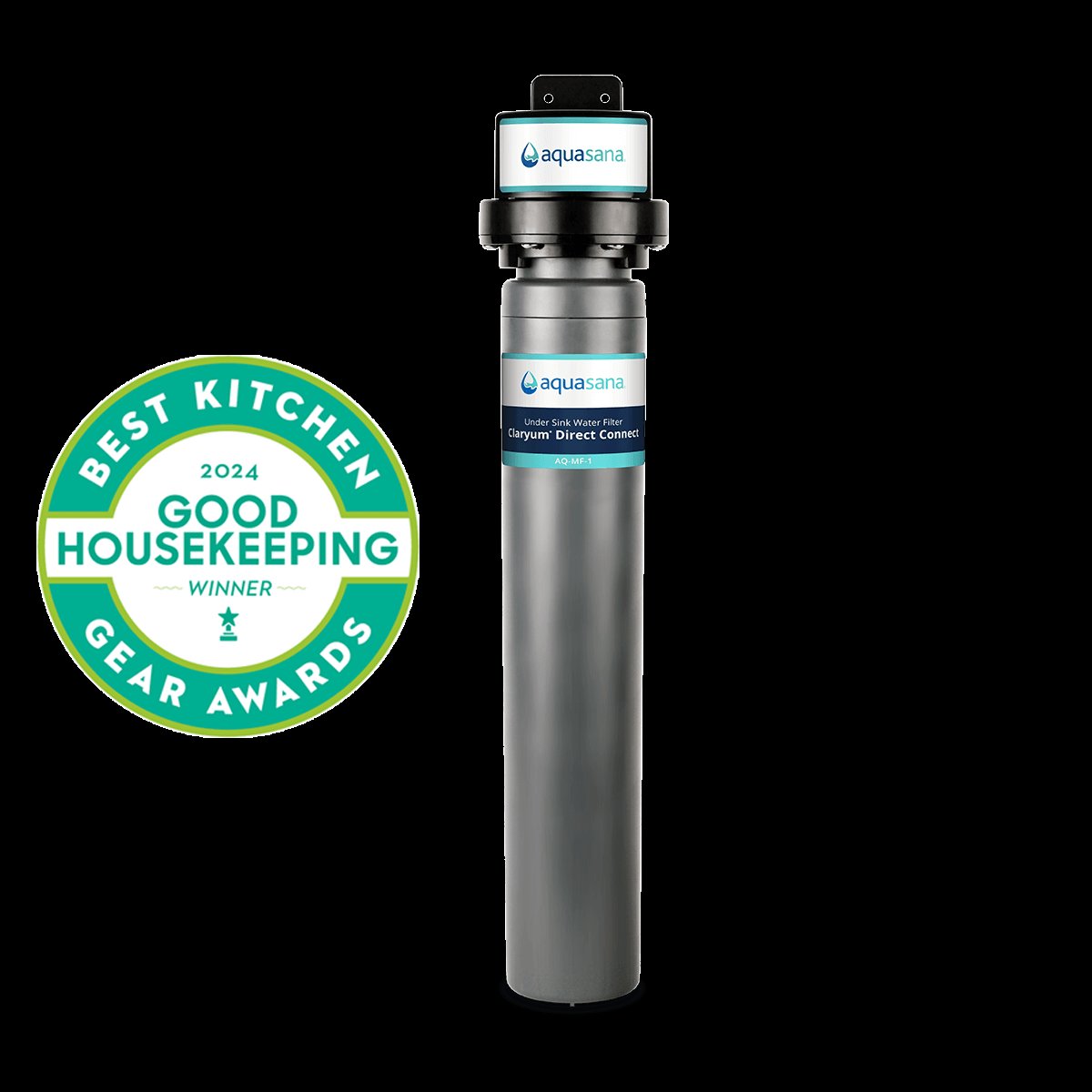
Aquasana Claryum Direct Connect (AQ-MF-1)
Aquasana Claryum Direct Connect (AQ-MF-1)
Aquasana's performance data sheet for this under-sink filter (AQ-MF-1) lists 95% trihalomethane reduction and 98% haloacetonitrile reduction under its NSF/ANSI 53 VOC testing, plus chlorine and chloramine reduction.
Compare sizing, treatment options and ongoing costs in our best under-sink water filters guide.
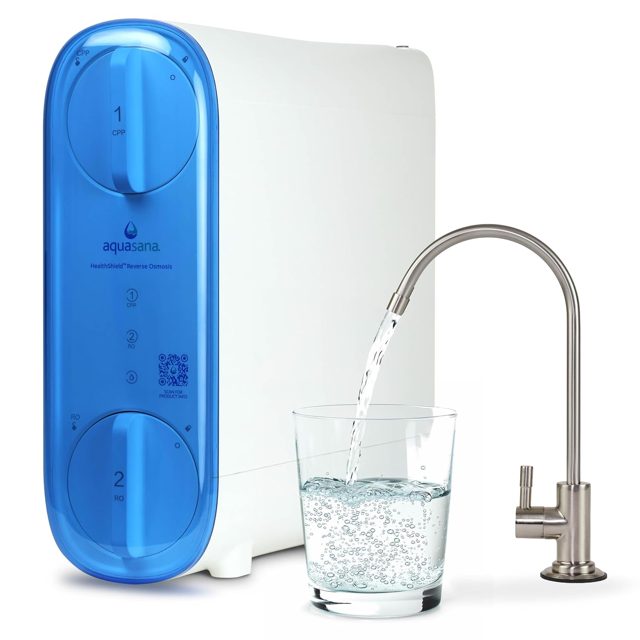
Aquasana Tankless Reverse Osmosis System (800 GPD)
Aquasana Tankless Reverse Osmosis System (800 GPD)
Aquasana's performance data sheet for this tankless RO system (AQ-HSRO800) lists the same 95% trihalomethane and 98% haloacetonitrile reduction, along with reduction of dissolved contaminants like fluoride and nitrate under NSF/ANSI 58.
Compare sizing, treatment options and ongoing costs in our best reverse osmosis systems guide.
For showers, a whole-house carbon system is the practical fix; compare options in our whole-house carbon filters guide.
Byproduct treatment options compared
| Method | Treats | Watch out for |
|---|---|---|
| Certified carbon block filter | THMs at one tap | Choose a listing that names THMs or VOCs |
| Reverse osmosis | Drinking water | Carbon stages do most of the THM work |
| Whole-house carbon | Showers and every tap | Size for flow and change media on schedule |
| Pitcher filters | Varies widely | Many are only certified for chlorine taste |
| Boiling | Some THMs only | Can concentrate haloacetic acids |
Bottom line
Check your water quality report for THMs and HAA5. If you want lower levels, a certified carbon filter or RO system handles drinking water, and whole-house carbon covers showers. Compare full rankings in our best under-sink water filters guide and see the other common water contaminants.