What chloramine is
Utilities make chloramine by adding a small amount of ammonia to chlorine. It stays active longer in long pipe networks and forms fewer regulated byproducts than chlorine alone.
- Who uses it: EPA reports more than one in five Americans drinks chloraminated water. See EPA on chloramines.
- How to tell: your annual water quality report names the disinfectant. Chloramine smells less than chlorine.
Compare the two in chloramine vs chlorine removal.
Safety and the EPA limit
- EPA limit: 4 mg/L as a maximum residual for public water.
- Must be removed for: kidney dialysis water and fish tanks or ponds.
- Pipes and parts: chloramine can wear out some rubber parts faster, and in some systems it can contribute to nitrite forming in pipes; see nitrite in water.
Why chloramine is harder to remove
Carbon removes chlorine almost instantly. Chloramine needs more contact time, so a small or fast-flowing filter may let much of it through.
A filter that lists only "chlorine taste and odor" is not proof it handles chloramine. Look for chloramine reduction by name on the listing or data sheet.
Chloramine filters to compare
Both data sheets below list chloramine reduction by name. They treat drinking and cooking water at one tap.
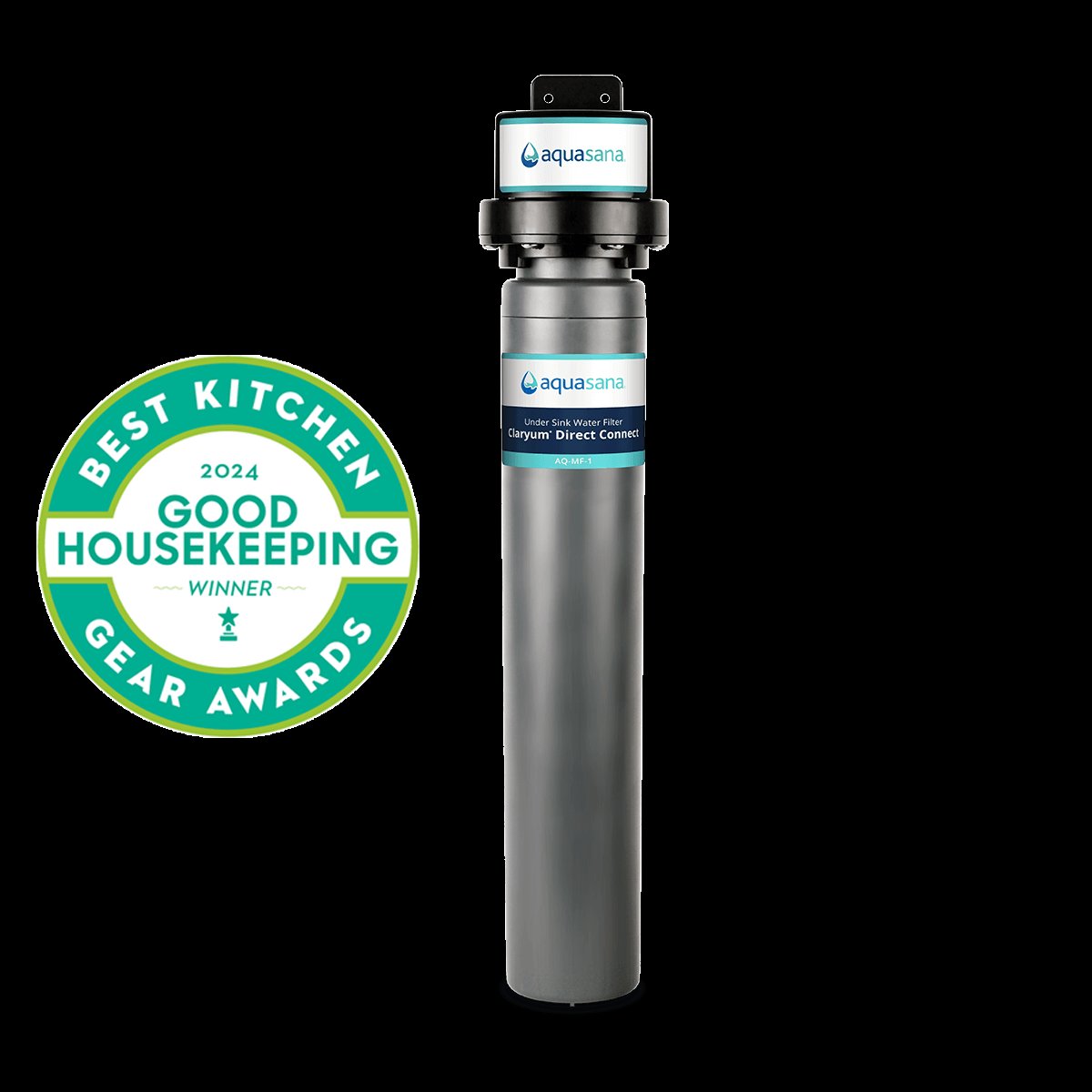
Aquasana Claryum Direct Connect (AQ-MF-1)
Aquasana Claryum Direct Connect (AQ-MF-1)
Aquasana's performance data sheet for this under-sink filter (AQ-MF-1) lists 96.06% chloramine reduction under NSF/ANSI 42, plus lead, cyst and PFOA/PFOS reduction under NSF/ANSI 53. It connects to your existing faucet.
Compare sizing, treatment options and ongoing costs in our best under-sink water filters guide.
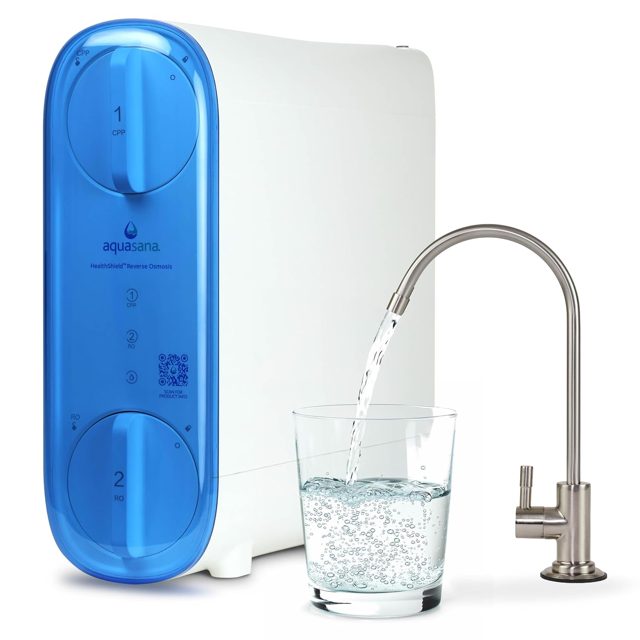
Aquasana Tankless Reverse Osmosis System (800 GPD)
Aquasana Tankless Reverse Osmosis System (800 GPD)
Aquasana's performance data sheet for this tankless RO system (AQ-HSRO800) lists 88.95% chloramine reduction from a 3.0 mg/L test under NSF/ANSI 42, plus reduction of fluoride, arsenic V and other dissolved contaminants under NSF/ANSI 58.
Compare sizing, treatment options and ongoing costs in our best reverse osmosis systems guide.
For whole-house options and catalytic carbon systems, compare our best chloramine water filters and the activated vs catalytic carbon guide.
Chloramine removal options compared
| Method | Treats | Watch out for |
|---|---|---|
| Certified under-sink carbon filter | One kitchen tap | Choose a listing that names chloramine |
| Catalytic carbon whole-house system | Every tap and shower | Larger tank and slower flow than chlorine-only carbon |
| Reverse osmosis | Drinking water | Carbon stages must handle chloramine to protect the membrane |
| Vitamin C shower filter | One shower | Neutralizes rather than adsorbs; frequent cartridge changes |
| Ordinary chlorine shower filter | Mostly chlorine | May do little for chloramine |
| Boiling or letting water stand | Not practical | Chloramine is slow to evaporate |
Read more in our chloramine removal article.
Bottom line
If your city uses chloramine, buy a filter that names it. A certified under-sink filter or RO system covers drinking water, and a catalytic carbon system covers the whole house. Compare full rankings in our best whole-house water filters guide and see the other common water contaminants.