Pelican Whole House Water System Review 2026
Premium salt-free whole house filtration with industry-leading warranty
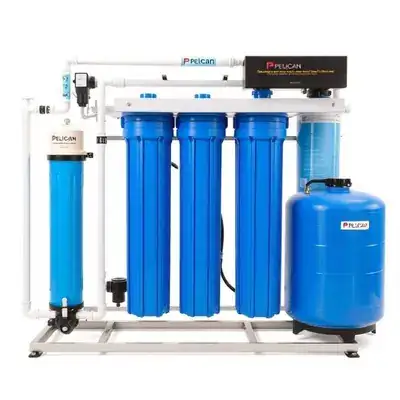
Quick Verdict
The Pelican Whole House System is a premium solution that combines multi-stage filtration with salt-free conditioning. It's excellent for city water or well water without iron. Build quality is exceptional, and the lifetime warranty provides peace of mind. However, it's expensive and doesn't actually soften water—it conditions it to prevent scale.
Best For
- Quality-focused homeowners with budget flexibility
- City water with chlorine/chloramine concerns
- Salt-free system preference
- Low maintenance priority (5-year filter life)
Not Ideal For
- Budget-conscious buyers (premium pricing)
- Well water with high iron (needs add-on)
- Very hard water (>35 GPG) needing true softening
Key Specifications
System Details
Cost & Warranty
Pros & Cons
What We Love
What Could Be Better
How Pelican Salt-Free Conditioning Works
Template Assisted Crystallization (TAC)
Scale prevention without salt or chemicals
Unlike traditional water softeners that use ion exchange to remove hardness minerals, Pelican's salt-free system uses Template Assisted Crystallization (TAC) technology. This transforms calcium and magnesium ions into harmless microscopic crystals that can't adhere to surfaces.
Hard Water Enters
Calcium/magnesium in dissolved form
TAC Media Contact
Minerals contact nucleation sites
Crystal Formation
Stable crystals form on media
Release & Flow
Crystals can't form scale
Important: Salt-free conditioning provides 85-95% scale prevention but doesn't produce the "slippery" soft water feel. You'll still have minerals in your water—they just won't form scale on pipes and appliances. For true soft water, you need a salt-based system.
How We Researched Performance
We compared these systems using manufacturer spec sheets, NSF, IAPMO and WQA certification listings, published third-party test reports and owner feedback. We did not install them in test homes or run our own lab tests, so treat any figures on this page as published or estimated values.
What matters most is matching the system to your water. Test your water first, then compare each model's rated flow, certified reductions and maintenance schedule with what your home needs. The most common owner complaints are a forgotten sediment pre-filter, which slowly cuts water pressure, and confusion about the bypass valve during maintenance.
Shower & Bathing Experience
5-Year Total Cost of Ownership
| Cost Item | Year 1 | Years 2-5 | 5-Year Total |
|---|---|---|---|
| System Purchase | $2,999 | - | $2,999 |
| Professional Installation | $550 | - | $550 |
| Pre-Filter Replacements | $100 | $400 | $500 |
| Main Filter (Year 5) | - | $350 | $350 |
| Salt & Electricity | $0 | $0 | $0 |
| Total 5-Year Cost | $3,649 | $750 | $4,399 |
Cost Per Day
$2.41/day
For whole house clean water
vs Bottled Water
Save $3,600+
Family of 4 bottled water cost
Pelican vs Competitors
| Feature | Pelican WH | SpringWell CF1 | Aquasana EQ-1000 |
|---|---|---|---|
| Price | $2,999 | $1,499 | $1,299 |
| Flow Rate | 10-15 GPM | 15 GPM | 7 GPM |
| Filter Life | 5 years | 1M gallons | 10 years |
| Salt-Free Included | Yes | Add-on | Yes |
| UV Option | Add-on | Add-on | Included |
| Warranty | Lifetime | Lifetime | 10 years |
Our Take:
Pelican justifies its premium price through exceptional build quality and salt-free conditioning included. SpringWell CF1 offers better value for budget-conscious buyers. Aquasana EQ-1000 is best if UV sterilization is important. All three are excellent—choose based on your priorities.
Installation & Maintenance
Installation
Professional (Recommended)
- • Cost: $400-700 depending on complexity
- • Time: 3-5 hours typical
- • Ensures warranty coverage
- • Proper pressure testing included
DIY Installation
- • Requires intermediate plumbing skills
- • Time: 4-6 hours for experienced DIYers
- • Main line cutting required
- • Bypass valves and fittings included
Maintenance Schedule
Replace sediment pre-filter (~$50)
Visual inspection, check for leaks, clean pre-filter housing
Replace carbon filter tank (~$350) and TAC media (~$200)
UV bulb replacement if equipped (~$100/year)
Final Recommendation
Premium Choice for Quality-Focused Homeowners
The Pelican Whole House System is premium quality with a premium price. It's best for homeowners who want salt-free conditioning and excellent filtration, and who don't have severe hardness or iron problems. The lifetime warranty and low maintenance are attractive, but understand it doesn't remove hardness like traditional softeners.
Best For:
- City water or well water without iron
- Moderate hardness (under 25 GPG)
- Those preferring salt-free, eco-friendly systems
- Quality-focused homeowners with budget flexibility
- Low-maintenance priority households
Compare Alternatives
SpringWell FutureSoft
Salt-free option at lower cost ($899)
Save $2,100
Aquasana EQ-1000
UV included, 10-year capacity
Save $1,700
All Whole House Filters
Compare all top systems
In-Depth Performance Analysis
Rather than relying on a single headline number, we look at how a filter is likely to perform over its whole life. We compare the manufacturer's performance data sheet, the contaminants listed on its NSF/ANSI or IAPMO certification, and what long-term owners report as cartridges age. Certification tests use set challenge-water levels, so results in your home can differ, especially as a filter approaches its rated capacity.
Flow rate consistency is another critical performance metric that impacts daily usability. Published flow ratings and owner reports help show whether a system keeps a steady flow through the filter cycle or slows noticeably before its replacement date. Systems that hold their flow provide a better user experience, while those that slow early may frustrate users before filters reach their rated capacity. This helps set realistic expectations for day-to-day performance.
Installation quality directly affects long-term system reliability. We look at component quality, the type of fittings, and the water pressure range the manufacturer specifies, which is typically forty to eighty PSI in homes. Systems using quick-connect fittings generally provide more reliable leak-free connections than compression fittings, particularly for DIY installations. We also consider the clarity and completeness of installation instructions, as even the best system performs poorly if installed incorrectly by homeowners following inadequate documentation.
Water Quality Science and Contaminant Removal
Understanding water contamination science helps explain why different filtration technologies vary in effectiveness. Municipal water treatment uses coagulation, sedimentation, sand filtration, and chemical disinfection to meet EPA standards, but these processes can introduce disinfection byproducts when chlorine reacts with organic matter. Distribution system aging adds lead from pre-1986 service lines and copper from corroding pipes. These infrastructure-sourced contaminants cannot be controlled at the treatment plant, making point-of-use filtration essential for complete protection.
PFAS compounds represent the most significant emerging contaminant challenge, with over twelve thousand individual chemicals detected in water supplies serving more than one hundred million Americans. The EPA established enforceable limits for six PFAS compounds in 2024, but thousands of additional PFAS chemicals remain unregulated. Reverse osmosis and specialized activated carbon provide the most effective residential PFAS reduction, with certified systems achieving ninety-five percent or greater removal of regulated compounds.
Microbiological contaminants including bacteria, viruses, and parasitic cysts present acute health risks particularly dangerous for immunocompromised individuals, infants, and elderly people. Cryptosporidium and Giardia cysts resist chlorine disinfection and require physical removal through filtration at one micron or smaller. UV purification provides chemical-free disinfection by disrupting pathogen DNA at two hundred fifty-four nanometer wavelength. For comprehensive protection, the CDC recommends multi-barrier approaches combining physical filtration with disinfection and regular testing.
Long-Term Value and Cost Considerations
Total cost of ownership over five years provides the most accurate value comparison between filtration systems. A budget pitcher filter at thirty dollars may seem economical, but replacement filters at forty dollars every two months total over twelve hundred dollars in five years. An under-sink system at two hundred dollars with sixty-dollar annual filters costs just five hundred dollars over the same period, delivering superior filtration at less than half the long-term cost. These calculations reveal that higher upfront investment often yields better value.
Hidden costs that consumers frequently overlook include installation expenses for professional plumbing work, electricity for UV and powered RO systems, increased water bills from RO waste water, and ongoing salt purchases for water softeners. Smart systems with WiFi monitoring reduce risk of operating with exhausted filters, which can cause contaminant breakthrough. Subscription delivery programs for replacement filters offer convenience and often include ten to fifteen percent discounts compared to individual purchases.
Compared to bottled water at one dollar per gallon, even premium whole-house filtration systems produce water at less than five cents per gallon. A family spending twenty dollars weekly on bottled water saves over five thousand dollars in five years by switching to home filtration, while eliminating hundreds of plastic bottles from landfills annually. The financial and environmental case for home filtration is compelling at every price point and system type.
Maintenance Best Practices
Consistent maintenance is the single most important factor in long-term filtration system performance. Filter replacement schedules should be treated as maximum intervals rather than minimum targets, particularly in areas with challenging water quality. Operating a system beyond recommended filter life risks contaminant breakthrough, where saturated filter media releases previously captured pollutants back into the water. Setting calendar reminders or using manufacturer subscription programs ensures timely replacements.
Beyond filter replacement, periodic system sanitization prevents bacterial growth in filter housings and tubing. Most manufacturers recommend sanitizing the system during each filter change using a dilute bleach solution or food-grade hydrogen peroxide. Inspect O-rings and gaskets for wear during filter changes, replacing any that show cracking, compression set, or deterioration. Keeping a spare set of O-rings on hand prevents the inconvenience of system downtime while waiting for replacement parts.
Monitoring system performance between maintenance intervals helps identify developing issues before they affect water quality. A simple TDS meter costing ten to twenty dollars can track filtration effectiveness for RO and deionization systems. Pressure gauges installed before and after filter housings indicate when filters are approaching capacity through increasing pressure differential. Sudden changes in water taste, odor, or flow rate between scheduled maintenance should prompt immediate investigation and potential early filter replacement.
Explore Related Guides
Top reverse osmosis systems reviewed
Best Water PitchersAffordable pitcher filter options
Best Under-Sink FiltersPremium under-counter systems
Best Well Water FiltersFilters for private wells
Buying GuideChoose the right filter
Filtration MethodsCompare technologies
Lead Removal GuideProtect from lead
PFAS GuideForever chemicals explained
Cost ComparisonLong-term costs analyzed
Consumer Buying Guide
Making an informed water filtration purchase requires systematic evaluation of household needs, water quality challenges, budget constraints, and practical installation requirements. Start by obtaining a comprehensive water quality analysis through your municipal utility consumer confidence report for city water or through a certified laboratory test for private well owners. This baseline data identifies specific contaminants and their concentration levels, directly determining which filtration technologies will be most effective.
Next, determine your daily filtered water needs. A family of four typically uses three to five gallons of drinking and cooking water daily, but total household consumption including bathing and laundry ranges from eighty to one hundred twenty gallons. Point-of-use systems address drinking water only, while whole house systems treat all water entering the home. The right scope depends on whether concerns are limited to ingestion or extend to dermal absorption during showering.
Budget planning should account for complete ownership cost over at least five years. Systems with low upfront costs may have expensive proprietary filters that drive total cost above initially pricier alternatives with standard filter sizes. Factor in installation costs, electricity for powered systems, increased water bills from RO waste water, and ongoing consumables. Many premium manufacturers offer financing and satisfaction guarantees that reduce purchase risk.
Evaluate practical considerations including available installation space, existing plumbing configuration, and comfort with DIY maintenance. Measure the space under your sink or in your utility room before purchasing. Check water pressure with an inexpensive gauge, as some systems require minimum pressure levels. Reading verified customer reviews about installation experience and long-term reliability provides real-world insights that supplement specifications.
Advanced Filtration Technology Explained
Modern residential water filtration has evolved dramatically from simple charcoal filters to sophisticated multi-stage systems incorporating multiple complementary technologies. Activated carbon filtration remains the foundation of most systems, using adsorption to capture chlorine, volatile organic compounds, and taste-affecting chemicals at the molecular level. The two primary forms of carbon media serve different purposes: granular activated carbon provides good flow rates for whole-house applications, while compressed carbon block filters offer finer filtration down to half a micron with more consistent contaminant contact time.
Catalytic carbon represents the latest advancement in carbon technology, specifically engineered to break down chloramines through a catalytic reaction rather than simple adsorption. This distinction matters because chloramines have largely replaced chlorine in municipal water treatment across the United States, and standard activated carbon has limited effectiveness against these more stable disinfectant compounds. Systems incorporating catalytic carbon provide superior performance in municipalities using chloramine disinfection, which now includes more than one in five public water systems nationwide.
Ion exchange technology serves dual purposes in residential water treatment. In water softeners, resin beads exchange calcium and magnesium ions for sodium ions, preventing the scale buildup that reduces appliance efficiency and shortens plumbing fixture lifespan. Specialized ion exchange resins can target specific contaminants including lead, nitrates, perchlorate, and uranium with high selectivity. Kinetic degradation fluxion media uses copper and zinc to create an electrochemical reaction that reduces chlorine, controls bacterial growth, and removes hydrogen sulfide through oxidation-reduction reactions without chemical additives.
Ultraviolet purification provides chemical-free disinfection by disrupting the DNA of bacteria, viruses, and protozoa at wavelengths around two hundred fifty-four nanometers. UV systems are particularly valuable as a final treatment stage in multi-barrier systems for well water applications, though they require clear water with low turbidity for effective UV transmission. The combination of physical filtration, chemical adsorption, and UV disinfection creates a comprehensive treatment approach that addresses virtually every category of water contaminant encountered in residential settings.
Understanding Water Hardness and Treatment Methods
Water hardness, measured in grains per gallon or parts per million of calcium carbonate equivalents, affects roughly eighty-five percent of American households. Hard water causes scale buildup in pipes, water heaters, and appliances; reduces soap efficiency; leaves spots on dishes and fixtures; and can contribute to dry skin and hair. The United States Geological Survey classifies water below sixty milligrams per liter as soft, sixty to one hundred twenty as moderately hard, one hundred twenty to one hundred eighty as hard, and above one hundred eighty as very hard.
Ion exchange water softeners represent the traditional gold standard for hardness treatment. These systems contain a resin bed charged with sodium or potassium ions that swap places with calcium and magnesium ions as hard water passes through. When the resin bed becomes saturated with hardness minerals, the system regenerates by flushing with a brine solution that recharges the resin. Modern systems use demand-initiated regeneration with electronic metering that triggers regeneration based on actual water usage rather than a fixed schedule, optimizing both salt consumption and water waste.
Salt-free water conditioners offer an alternative approach that does not actually remove hardness minerals but instead transforms them through Template Assisted Crystallization technology. TAC converts dissolved calcium and magnesium into microscopic crystals that cannot adhere to surfaces, effectively preventing scale buildup without adding sodium to the water. This technology appeals to consumers on sodium-restricted diets, those concerned about environmental impact from brine discharge, and homeowners in regions where salt-based softener discharge is restricted by local water quality regulations.
The choice between salt-based softening and salt-free conditioning depends on hardness levels, water chemistry, and household priorities. Salt-based systems are generally more effective above twenty-five grains per gallon and provide the slippery soft water feel that many consumers prefer. Salt-free systems work well at moderate hardness levels, require no electricity or drain connection, and produce no wastewater. Some homeowners opt for combination systems that pair whole-house filtration with either softening or conditioning technology to address both contamination and hardness in a single installation.
Environmental Impact and Sustainability Considerations
The environmental footprint of water filtration extends beyond the immediate benefits of clean drinking water. Single-use plastic water bottles represent one of the most significant sources of plastic pollution globally, with Americans alone consuming approximately fifty billion plastic water bottles annually. Only about twenty-three percent of these bottles are recycled, meaning roughly thirty-eight billion bottles end up in landfills or the natural environment each year. By switching to filtered tap water, a typical family of four eliminates approximately one thousand plastic bottles annually from the waste stream.
The manufacturing process for bottled water itself carries substantial environmental costs. Producing a single plastic water bottle requires approximately three times the volume of water contained in the bottle, accounting for manufacturing, cooling, and cleaning processes. The petroleum required to produce plastic bottles for American consumption alone exceeds sixty million barrels annually. Transportation of bottled water from source to retail adds significant carbon emissions, particularly for imported brands. Home water filtration eliminates these upstream environmental costs entirely while providing equal or superior water quality.
Filter cartridge disposal is the primary environmental consideration for home filtration systems. Most spent filter cartridges contain activated carbon, polypropylene, and captured contaminants that currently end up in landfills. However, several manufacturers have implemented cartridge recycling programs that recover and regenerate filter materials. When selecting a filtration system, consider whether the manufacturer offers end-of-life cartridge recycling. Some innovative companies are developing biodegradable filter housings and plant-based filter media that further reduce the environmental impact of home water filtration.
Water waste from reverse osmosis systems has historically been a valid environmental concern, with traditional systems producing three to five gallons of wastewater for every gallon of purified water. Modern tankless RO systems with permeate pumps and recirculation technology have dramatically improved this ratio, achieving two-to-one or even one-point-five-to-one waste ratios. Some systems redirect wastewater to landscape irrigation or other non-potable uses, effectively eliminating the waste entirely. When evaluating RO systems, the waste ratio should be weighted against the environmental cost of the alternative water source, whether bottled water or another filtration technology.
Related Articles
Buying guide: Whole House Water Filters
Complete whole house filtration buyer's guide
Is the SpringWell CF4 worth it?
20 GPM whole-house carbon filter for 4-6 bath homes
In-depth Aquasana Rhino Max Flow breakdown
NSF-certified pro-grade Aquasana whole-house filter
SpringWell WHF Combo 4 (filter + softener): full review and verdict
CF4 + FutureSoft bundle for hard city water
Aquasana Rhino Pro Grade (UV + salt-free): full review and verdict
Carbon + UV + SimplySoft Aquasana stack
SpringWell CF4 versus Aquasana Rhino EQ-1000 — which wins
Large-home whole house filter showdown