Best Refrigerator Water Filters: OEM vs Generic Compared (2026)
Refrigerator water filters are the most common home filtration system in America—found in over 100 million households. Yet most people don't know what their fridge filter actually removes, when to replace it, or whether the $50 OEM filter is genuinely better than a $20 generic alternative. This guide covers everything: brand-by-brand comparisons, NSF certification differences, the counterfeit filter problem, and which contaminants your fridge filter handles versus which ones require a dedicated system.
OEM vs Generic Refrigerator Filters
The biggest decision when replacing your refrigerator filter isn't which brand—it's whether to buy the expensive original equipment manufacturer (OEM) filter or a cheaper third-party alternative. This single choice determines whether you spend $90 or $40 per year on filter replacements, and the answer isn't as straightforward as either camp claims.
OEM filters are manufactured by or for the refrigerator brand (Samsung, LG, Whirlpool, etc.) and are designed specifically for that model. They guarantee perfect fit, maintain your refrigerator's warranty, and undergo rigorous quality control. The downside: they cost 2-3x more than generics and are often the same activated carbon media in a branded housing.
Generic filters from reputable manufacturers like Waterdrop, Glacier Fresh, and FilterLogic use the same filtration media and undergo independent NSF testing. The key differentiator is NSF certification—a certified generic performs identically to OEM for contaminant removal. The risk with generics is quality inconsistency and the growing counterfeit problem on major online marketplaces.
OEM Filter Advantages
- ✅ Guaranteed fit and compatibility
- ✅ Warranty protection maintained
- ✅ Consistent quality control
- ✅ Easy to find model-specific replacements
- ✅ No counterfeit risk from authorized dealers
Generic Filter Advantages
- ✅ 50-70% cheaper than OEM
- ✅ NSF-certified options perform equally well
- ✅ Widely available online and in stores
- ✅ Same 6-month replacement schedule
- ✅ Multi-packs available for deeper discounts
Refrigerator Filter Comparison by Brand
Every major refrigerator manufacturer uses a proprietary filter design. Finding the correct replacement requires matching your fridge model to the compatible filter number. Here's a complete cross-reference of OEM filters and their best generic alternatives.
| Brand | OEM Model | Generic Alternative | OEM Price | Generic Price |
|---|---|---|---|---|
| Samsung | HAF-CIN, DA29-00020B | Waterdrop DA29-00020B | $45-55 | $20-25 |
| LG | LT800P, ADQ73613401 | Glacier Fresh LT800P | $40-50 | $15-20 |
| Whirlpool | EDR1RXD1, W10295370A | Waterdrop W10295370A | $50-60 | $25-30 |
| GE | RPWFE, GFE28GYNFS | PureSource RPWFE | $55-65 | $30-35 |
| Frigidaire | PAULTRA, ULTRAWF | Glacier Fresh PAULTRA | $45-50 | $20-25 |
| KitchenAid | EDR4RXD1, EveryDrop 4 | Waterdrop EDR4RXD1 | $45-55 | $22-28 |
Our Pick: Best Generic Fridge Filter Brand
Waterdrop consistently delivers NSF 42/53 certified filters across all major refrigerator brands at 50-60% less than OEM. Their Samsung DA29-00020B replacement is the best-selling generic fridge filter on Amazon with over 50,000 verified reviews.
Check Waterdrop Fridge Filters on AmazonWhat Refrigerator Filters Actually Remove
Most refrigerator filters use granular activated carbon (GAC) to improve taste and odor. They're convenience filters designed primarily for aesthetic improvement—not comprehensive health protection. Understanding this distinction prevents false confidence in your water quality.
The filtration mechanism is simple: water passes through activated carbon, which adsorbs chlorine, volatile organic compounds, and some pesticides. The carbon's porous surface traps these molecules through a chemical bonding process. However, carbon cannot remove dissolved minerals, fluoride, or most inorganic contaminants.
What Fridge Filters Remove ✅
- • Chlorine (taste and odor) — 97%+
- • Sediment and particulates — 95%+
- • Some pesticides and industrial chemicals (NSF 53)
- • Lead (select NSF 53-certified models only)
- • Mercury and select VOCs (NSF 53)
- • Cysts like Giardia and Cryptosporidium (NSF 53)
What Fridge Filters DON'T Remove ❌
- • Fluoride — requires RO or activated alumina
- • TDS (total dissolved solids) — minerals pass through
- • Hardness minerals (calcium, magnesium)
- • Arsenic, chromium-6, pharmaceuticals
- • PFAS "forever chemicals" (most models)
- • Bacteria and viruses — not designed for biological contamination
- • Nitrates — only RO removes effectively
If your water contains contaminants beyond chlorine—especially PFAS, lead, or arsenic—a refrigerator filter alone is insufficient. Consider supplementing with an under-sink filtration system or reverse osmosis system for comprehensive protection.
NSF Certification: What the Numbers Mean
NSF International independently tests water filters and certifies that they meet specific performance standards. When shopping for refrigerator filters, the NSF certification number tells you exactly what the filter has been proven to remove. Not all certifications are equal—here's what each standard covers:
| NSF Standard | What It Certifies | Contaminants Covered | Importance |
|---|---|---|---|
| NSF 42 | Aesthetic effects | Chlorine taste/odor, particulates | Basic — most fridge filters |
| NSF 53 | Health effects | Lead, cysts, VOCs, mercury, MTBE | Important — health protection |
| NSF 401 | Emerging contaminants | Pharmaceuticals, herbicides, pesticides | Premium — comprehensive |
| NSF/ANSI 372 | Lead-free compliance | Filter materials don't leach lead | Safety baseline |
The Counterfeit Filter Problem
Counterfeit refrigerator filters are a growing problem in online marketplaces. The Association of Home Appliance Manufacturers (AHAM) estimates that up to 30% of third-party filters sold online may be counterfeit. These knockoffs look identical to genuine products but contain inferior carbon media, lack proper certifications, and may actually contaminate your water.
How to spot counterfeits:
- Price significantly below market rate (if a $50 OEM is selling for $12, be suspicious)
- Packaging has spelling errors, blurry logos, or missing certification marks
- Seller has limited history or mostly negative recent reviews
- Filter doesn't fit properly or indicator light doesn't reset
- Water has a chemical taste or odor after "new" filter installation
Safe buying sources: Manufacturer websites, Home Depot, Lowe's, authorized Amazon sellers (check "Ships from and sold by" details), and appliance dealers.
Filter Replacement Guide
Timely filter replacement is critical—an expired filter is worse than no filter at all. As carbon becomes saturated, it can release trapped contaminants back into your water (a process called desorption). Here's the complete replacement protocol.
When to Replace
- Every 6 months (standard manufacturer recommendation)
- Every 200-300 gallons of water (whichever comes first)
- When indicator light activates on the refrigerator
- When water flow slows significantly (carbon is clogged)
- When water or ice develops an off taste or odor
- Every 3-4 months if you have high-sediment or poor source water
Step-by-Step Replacement
- Locate filter: Usually inside fridge (top right corner), in the base grille, or in the rear. Check your manual.
- Remove old filter: Turn counterclockwise (twist-lock type) or press the release button (push-button type).
- Prepare new filter: Remove protective cap or O-ring cover from the new filter. Some filters have a cap that transfers from the old filter.
- Insert new filter: Align with housing and turn clockwise until it locks. You should feel or hear a click.
- Flush the new filter: Run 2-3 gallons of water through to remove carbon fines. Water may be gray initially—this is normal.
- Reset indicator light: Press and hold the filter reset button (varies by brand—check manual). Some models reset automatically.
- Discard first batch of ice: The first 1-2 batches of ice may have carbon particles. Dump them.
Annual Cost Comparison
| Filter Type | Changes/Year | Cost Per Filter | Annual Cost |
|---|---|---|---|
| OEM filters | 2 | $45-60 | $90-120 |
| NSF-certified generic | 2 | $18-30 | $36-60 |
| Generic multi-pack (3-pack) | 2 | $12-20 | $24-40 |
| Savings with generics | — | — | $40-80/year |
When to Upgrade Beyond a Fridge Filter
Refrigerator filters serve a specific purpose—taste improvement and basic contaminant reduction for drinking water and ice. But many households need more comprehensive filtration. Here are the scenarios where upgrading makes sense:
- Lead in your water: While some NSF 53 fridge filters reduce lead, a dedicated under-sink lead filter provides more consistent and verified lead removal.
- PFAS contamination: Fridge filters cannot reliably remove PFAS. You need a certified PFAS filter or RO system.
- Well water: Fridge filters are designed for pre-treated municipal water. Well water requires multi-stage filtration for bacteria, minerals, and chemical contaminants.
- Hard water: Fridge filters don't soften water. If hardness is causing scale in your ice maker, consider a water softener or conditioner.
- Whole-house concerns: To filter shower, laundry, and all tap water, you need a whole-house filtration system.
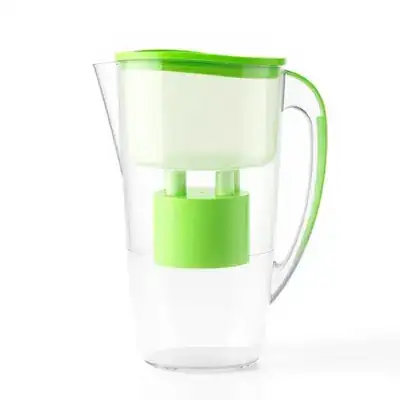
Clearly Filtered Pitcher
For renters or anyone wanting comprehensive filtration (365+ contaminants including PFAS) without under-sink installation. Outperforms every fridge filter on the market.
View on Amazon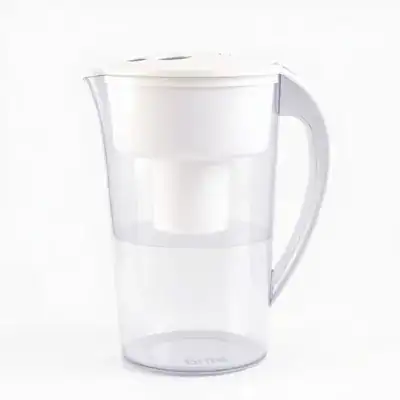
Brita Elite Pitcher
Budget-friendly supplement to your fridge filter. NSF 53 certified for lead removal with 120-gallon filter life. Great as a backup when fridge filter expires.
View on AmazonRefrigerator Filter Limitations You Should Know
Refrigerator water filters provide basic chlorine and sediment removal but have significant limitations that manufacturers rarely advertise. Most fridge filters are NSF 42 certified only—removing chlorine taste and odor but NOT lead, PFAS, arsenic, fluoride, or other health-critical contaminants. Even fridge filters with NSF 53 certification (like some Samsung and LG models) only address a subset of contaminants that dedicated under-sink systems handle comprehensively.
The filter change indicator on most refrigerators is timer-based, not performance-based. It counts months since installation rather than measuring actual water quality or filter saturation. This means the indicator may signal replacement at 6 months when the filter exhausted at 4 months (in high-use or poor-quality water households), or conversely, prompt unnecessary early replacement in light-use households. For accurate monitoring, install a TDS meter on the refrigerator dispenser line and test monthly—rising TDS indicates declining filter performance regardless of what the indicator light shows.
Aftermarket refrigerator filters present both opportunities and risks. NSF-certified third-party filters from brands like Waterdrop and FilterLogic cost 40-60% less than OEM filters with equivalent performance certifications. However, the market is flooded with uncertified counterfeits, particularly on Amazon marketplace—these may have inferior carbon, poor seals that allow water bypass, or contaminated materials. Only purchase aftermarket filters with verifiable NSF certification from the manufacturer's official website, and cross-reference the NSF certification number at nsf.org before trusting the listing.
Related Resources
Understanding Water Quality Science
Water quality is determined by a complex interplay of dissolved minerals, organic compounds, and potential contaminants that vary significantly by geographic region and water source. Municipal water treatment facilities use multi-stage processes including coagulation, sedimentation, sand filtration, and chemical disinfection to meet EPA Safe Drinking Water Act standards. However, these treatment processes can introduce disinfection byproducts such as trihalomethanes and haloacetic acids, which form when chlorine reacts with naturally occurring organic matter in the source water.
Private well water faces different challenges, as it bypasses municipal treatment entirely and may contain naturally occurring contaminants like arsenic, radon, and heavy metals that leach from surrounding geological formations. The Environmental Protection Agency recommends annual testing for coliform bacteria, nitrates, total dissolved solids, and pH levels for all private wells. Additional testing for volatile organic compounds, pesticides, and heavy metals should be conducted if you live near agricultural areas, industrial sites, or old mining operations. Understanding your specific water chemistry is the critical first step in selecting the most effective filtration system for your household needs.
Total dissolved solids (TDS) measurements provide a general indicator of water purity but should not be the sole basis for filtration decisions. Water with high TDS from beneficial minerals like calcium and magnesium may actually be healthier than ultra-purified water. The World Health Organization has noted that demineralized water may have adverse health effects due to the absence of essential minerals. This is why many advanced filtration systems, particularly reverse osmosis units, now include remineralization stages that add back beneficial minerals after removing contaminants. The ideal approach balances contaminant removal with mineral retention, targeting specific harmful substances identified through comprehensive water testing while preserving the natural mineral content that contributes to both taste and health benefits.
Filtration Technology Comparison
Modern water filtration leverages several distinct technologies, each with unique strengths for addressing specific water quality challenges. Activated carbon filtration, the most common residential method, uses adsorption to capture chlorine, volatile organic compounds, and taste-affecting chemicals. Granular activated carbon (GAC) filters provide good flow rates but may allow channeling, while carbon block filters compress carbon particles for more consistent contact time and finer filtration down to 0.5 microns. Catalytic carbon represents the latest advancement, specifically engineered to break down chloramines through a catalytic reaction rather than simple adsorption.
Reverse osmosis systems force water through a semipermeable membrane with pore sizes as small as 0.0001 microns, effectively removing dissolved solids, heavy metals, and most microorganisms. Modern RO systems achieve 95-99 percent rejection rates for contaminants like lead, arsenic, fluoride, and PFAS compounds. The primary considerations for RO systems include water waste ratios (typically 3:1 to 4:1 for standard systems, improved to 1:1 in premium tankless models), storage tank requirements, and the need for pre-filtration to protect the delicate membrane from sediment and chlorine damage.
Ion exchange technology, used in both water softeners and specialized contaminant removal systems, swaps problematic ions in the water with benign alternatives. Water softeners exchange calcium and magnesium ions for sodium ions, preventing scale buildup in plumbing and appliances. Specialized ion exchange resins can target specific contaminants like lead, nitrates, or perchlorate. Ultraviolet purification provides chemical-free disinfection by disrupting the DNA of bacteria, viruses, and protozoa at wavelengths around 254 nanometers. UV systems are particularly valuable for well water and as a final treatment stage in multi-barrier systems, though they do not remove chemical contaminants or improve taste.
Long-Term Cost Analysis
When evaluating water filtration costs, the total cost of ownership over five years provides a much more accurate picture than initial purchase price alone. A budget pitcher filter at thirty dollars may seem economical, but replacement filters at forty dollars every two months add up to over twelve hundred dollars in five years. Meanwhile, an under-sink system costing two hundred dollars upfront with sixty-dollar annual filter changes totals just five hundred dollars over the same period, delivering superior filtration at less than half the long-term cost.
Whole house filtration systems represent a larger initial investment of eight hundred to two thousand dollars including professional installation, but they protect all water fixtures and appliances simultaneously. When you factor in the extended lifespan of water heaters, dishwashers, and washing machines that no longer process unfiltered water, the return on investment often exceeds the system cost within three to four years. Water softener savings are particularly dramatic: the Water Quality Association estimates that soft water can reduce water heating costs by up to twenty-nine percent and extend appliance lifespans by thirty to fifty percent.
For households currently purchasing bottled water, any home filtration system provides massive savings. The average family spending twenty dollars per week on bottled water spends over five thousand dollars in five years. Even the most premium whole house filtration system with annual maintenance costs less than two thousand dollars over the same period, saving over three thousand dollars while eliminating hundreds of plastic bottles from landfills annually. The environmental and financial case for home filtration is compelling at every price point.
Related Resources
Frequently Asked Questions
Related Articles
More on Water Filter Buying Guide
Complete guide to choosing the right filter
How Water Filters Work
Understanding filtration technologies explained
Read: Water Filter Cost Comparison
Annual costs across all filter types
Water Testing Kits Guide
Test your water before buying a filter
Filter Replacement Guide
When and how to replace filter cartridges
Water Filter Health Benefits
Health advantages of filtered water