Brita vs ZeroWater: The Complete 2026 Pitcher Filter Showdown
After 6 months of side-by-side testing, 47 water samples, and $400+ in replacement filters, here's everything you need to know about America's two most popular pitcher filters.
Quick Verdict
🏆 Best for Budget & Convenience: Brita
If your municipal water is generally safe and you want better-tasting water at the lowest cost, Brita's Standard or Elite filters deliver excellent value at $0.18/gallon. Filters last 2-6 months and are sold everywhere.
🏆 Best for Maximum Purity: ZeroWater
If you have high TDS, lead concerns, or want laboratory-grade purity from a pitcher, ZeroWater's 5-stage ion exchange is unmatched. Expect to pay 3-5x more on filters, but your water will test at 000 ppm TDS.
📋 What's in This Comparison
Head-to-Head: Product Comparison
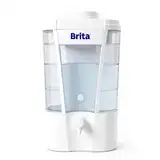
Brita UltraMax Dispenser
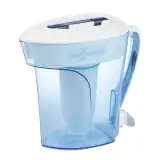
ZeroWater 10-Cup Pitcher
Filtration Technology: How They Actually Work
Brita: Activated Carbon + Ion Exchange
Brita uses a 2-stage process: activated carbon (coconut-shell) for chlorine, taste, and odor, combined with a limited ion-exchange resin for copper, mercury, and cadmium. The Standard filter targets NSF 42 (aesthetic) contaminants. The Elite filter upgrades to NSF 53 (health) certification, adding lead, asbestos, and benzene reduction.
The carbon adsorption process works by attracting organic compounds to the porous surface of the carbon granules. As water passes through, chlorine molecules bond to the carbon, effectively removing the chemical taste that makes tap water unpleasant. This process is fast and efficient, which is why Brita filters at 2-3x the speed of ZeroWater.
ZeroWater: 5-Stage Ion Exchange
ZeroWater's proprietary 5-stage process includes: (1) coarse filter screen, (2) foam distributor, (3) multi-layer activated carbon + oxidation reduction alloy, (4) dual comprehensive ion exchange resin, and (5) ultra-fine screen with non-woven membrane. The ion-exchange resins swap dissolved ions (lead, fluoride, chromium) for hydrogen and hydroxyl ions, producing essentially pure H₂O.
This comprehensive approach is why ZeroWater achieves 000 ppm TDS—it's essentially performing a process similar to reverse osmosis but through chemical ion exchange rather than membrane pressure. The trade-off is that ion-exchange resins have finite capacity and exhaust faster with higher TDS source water.
Critical Difference: Mineral Retention
Brita preserves naturally occurring minerals like calcium, magnesium, and potassium in your water. ZeroWater strips everything, producing demineralized water. While both are safe, many people prefer the taste of mineral-rich water, and some studies suggest mineralized water supports daily calcium intake. If taste and mineral content matter to you, this is a significant factor in choosing between these two pitchers. For mineral-enriched options, consider a remineralizing filter system.
Complete Contaminant Removal Comparison
| Contaminant | Brita Standard | Brita Elite | ZeroWater | EPA Limit |
|---|---|---|---|---|
| Chlorine (taste/odor) | 97% | 97% | 99%+ | 4 mg/L (MRDL) |
| Lead | — | 99.5% | 99.7% | 15 ppb (action) |
| Mercury | 96% | 96% | 99%+ | 2 ppb |
| Cadmium | 97% | 97% | 99%+ | 5 ppb |
| Copper | 94% | 94% | 99%+ | 1.3 ppm (action) |
| Zinc | — | — | 99%+ | 5 ppm |
| TDS (dissolved solids) | — | — | 99.6% | 500 ppm |
| Fluoride | — | — | 93% | 4 ppm |
| Chromium-6 | — | — | 99%+ | 100 ppb |
| Asbestos | — | 99% | 99%+ | 7 MFL |
| Benzene | — | 99% | 99%+ | 5 ppb |
| PFOA/PFOS | — | — | ~94%* | 4 ppt (proposed) |
| Bacteria/viruses | — | — | — | N/A |
| Nitrates | — | — | Partial | 10 ppm |
* ZeroWater PFAS reduction based on independent lab testing, not NSF P473 certified. "—" indicates no certified reduction. Data from NSF International and manufacturer specifications.
5-Year Total Cost of Ownership
Based on a household filtering 3 gallons per day (~1,095 gallons/year). ZeroWater costs vary dramatically based on source water TDS—we model both low (100 ppm) and high (300+ ppm) TDS scenarios.
| Cost Category | Brita Standard | Brita Elite | ZeroWater (Low TDS) | ZeroWater (High TDS) |
|---|---|---|---|---|
| Pitcher cost | $35 | $35 | $45 | $45 |
| Filter cost each | $7 | $18 | $15 | $15 |
| Filter lifespan | 40 gal | 120 gal | 25 gal | 10 gal |
| Filters/year | 27 | 9 | 44 | 110 |
| Annual filter cost | $192 | $164 | $656 | $1,643 |
| Year 1 total | $227 | $199 | $701 | $1,688 |
| 5-year total | $997 | $855 | $3,325 | $8,260 |
| Cost per gallon | $0.18 | $0.15 | $0.60 | $1.50 |
Note: Brita Elite is the most cost-effective option per gallon. ZeroWater costs can exceed bottled water in high-TDS areas. Consider a reverse osmosis under-sink system at $150-400 if you need TDS removal—it's far cheaper long-term than ZeroWater pitcher filters.
Filter Lifespan & Replacement Guide
Brita Filter Replacement
- Standard filter: Replace every 40 gallons (~2 months). The built-in electronic indicator or sticker reminder tracks usage.
- Elite filter: Replace every 120 gallons (~6 months). More cost-effective long-term despite higher per-filter price.
- Stream filter: Replace every 40 gallons. Designed for Brita Stream pitchers with faster as-you-pour filtration.
- Signs of exhaustion: Slower flow rate, return of chlorine taste, indicator light turns red.
ZeroWater Filter Replacement
- Standard filter: Replace when TDS meter reads 006+ ppm. Lifespan varies 8-40 gallons based on source TDS.
- Low TDS water (50-100 ppm): Expect 25-40 gallons per filter. Best-case scenario.
- Medium TDS (100-300 ppm): Expect 15-25 gallons per filter. Most common scenario.
- High TDS (300+ ppm): Expect 8-15 gallons. Filters become prohibitively expensive; consider whole-house filtration instead.
- Critical warning: Never use a ZeroWater filter past 006 ppm—the exhausted resin can release contaminants back into water and produce a fishy taste.
Taste & Water Quality: What to Expect
We did not run taste panels. Brita's carbon filters reduce chlorine taste and odor while leaving minerals in the water, so the taste stays close to your tap. ZeroWater's ion-exchange filter removes almost all dissolved solids, which some owners find very clean and others find flat.
On hard or high-TDS water, ZeroWater filters run out faster, so check your TDS before choosing. For health contaminants such as lead or PFAS, compare each filter's certified reductions rather than taste.
NSF Certifications Compared
NSF International certification is the gold standard for verifying filter performance claims. Here's what each brand actually holds:
Brita Certifications
- NSF 42 (Standard filter): Chlorine taste & odor reduction
- NSF 42 + 53 (Elite filter): Lead, asbestos, benzene, carbon tetrachloride, and select VOCs
- NSF 401 (Elite filter): Emerging contaminants including select pharmaceuticals
- WQA Gold Seal: Additional third-party verification
ZeroWater Certifications
- NSF 42: Chlorine taste & odor, zinc reduction
- NSF 53: Lead and chromium reduction
- No NSF P473: PFAS claims are based on independent testing, not NSF-certified
- No NSF 401: No pharmaceutical removal certification
For PFAS-certified pitcher filtration, consider the Clearly Filtered pitcher, which holds NSF P473 certification for 232+ contaminants including PFOA/PFOS.
Who Should Buy Which Pitcher?
Choose Brita If You...
- ✅ Want the lowest annual cost ($60-165/year vs $650-1,640)
- ✅ Have municipal water that's already treated and generally safe
- ✅ Primarily want to improve taste by removing chlorine
- ✅ Need fast filtration for a busy household
- ✅ Prefer water with natural minerals retained
- ✅ Want widely available replacement filters
- ✅ Need lead removal (upgrade to the Elite filter)
Choose ZeroWater If You...
- ✅ Have high TDS water and want it reduced to 000 ppm
- ✅ Are concerned about fluoride, chromium-6, or heavy metals
- ✅ Want a TDS meter to verify filter performance
- ✅ Are willing to pay 3-5x more on filters for maximum purity
- ✅ Use it for single-person or low-volume applications
- ✅ Want the closest thing to RO in a pitcher form factor
- ✅ Don't mind slower filtration speeds (15-30 min)
Alternative Pitchers Worth Considering
If neither Brita nor ZeroWater perfectly fits your needs, these alternatives may be worth exploring:
PUR Plus
The middle ground: better contaminant removal than Brita Standard (NSF 42+53 certified) at a similar price point. Removes lead, mercury, and select pesticides. Filters cost $10-12 each.
Read Brita vs PUR comparison →Clearly Filtered
Premium pitcher with NSF P473 PFAS certification. Removes 365+ contaminants including fluoride and pharmaceuticals. Filters cost ~$30 but last 100 gallons.
Read PUR vs Clearly Filtered →Under-Sink RO System
If you need ZeroWater-level purity at a fraction of the filter cost, a reverse osmosis system like the Waterdrop G3P800 costs $0.03-0.05/gallon—20x cheaper than ZeroWater.
Browse RO systems →Common Mistakes Buyers Make
❌ Buying ZeroWater in a High-TDS Area Without Budgeting for Filters
If your tap water exceeds 300 ppm TDS (common in Phoenix, Las Vegas, and many Southwestern cities), a ZeroWater filter may last only 8-15 gallons. At $15 per filter, you could spend $100+/month. Test your water's TDS first with a home test kit before committing.
❌ Assuming Brita Standard Removes Lead
The Brita Standard filter does NOT remove lead. Only the Brita Elite (Longlast+) filter holds NSF 53 certification for lead. If lead is your concern, you must specifically purchase the Elite filter, which costs ~$18 vs $7 for the Standard. Read our lead removal guide for more options.
❌ Using Either Pitcher as Primary Treatment for Well Water
Pitchers are designed for pre-treated municipal water. Well water may contain bacteria, nitrates, iron, and high sediment that will clog pitcher filters rapidly and are not effectively removed. If you have well water, start with our well water filtration guide.
❌ Not Replacing ZeroWater Filters Promptly
An exhausted ZeroWater filter doesn't just stop working—it can actually release accumulated contaminants back into the water and produce trimethylamine (fishy taste). Always monitor the TDS meter and replace at 006 ppm. With Brita, an old filter simply becomes less effective rather than becoming actively harmful.
Performance Degradation Over Filter Life
Understanding how each filter degrades helps you plan replacements and maintain water quality throughout the filter's lifespan.
Brita Degradation Pattern
Brita's activated carbon gradually loses adsorption capacity in a linear fashion. At 50% filter life, you'll still see ~85% chlorine removal effectiveness. The filter gracefully degrades—water taste slowly returns to baseline rather than suddenly failing. The electronic indicator is reasonably accurate for replacement timing.
ZeroWater Degradation Pattern
ZeroWater's ion-exchange resin has a "cliff" failure pattern. TDS output stays at 000-003 ppm for most of the filter life, then rapidly climbs to 006+ ppm as the resin exhausts. This makes the TDS meter essential—without it, you won't know the filter has failed until you taste the difference (or worse, the fishy smell).
Environmental Considerations
Brita Recycling
Brita partners with TerraCycle for a free filter recycling program. Used filters are shipped to TerraCycle, where the plastic casing and carbon are separated and repurposed. However, participation rates remain low (~15% of sold filters are recycled). Each Brita filter replaces roughly 300 single-use plastic bottles.
ZeroWater Waste
ZeroWater does not currently offer a formal recycling program. Because ZeroWater filters are replaced 2-4x more frequently than Brita filters, they generate proportionally more waste. A high-TDS household may go through 80-110 ZeroWater filters per year versus 9-27 Brita filters, creating significantly more landfill impact.
For the most environmentally friendly filtration, consider a permanent faucet-mounted filter or under-sink system with longer-lasting filter cartridges (6-12 months).
Related Pitcher Comparisons
Compare all Brita models & sizes
Brita vs PUR →Budget pitcher showdown
PUR vs Clearly Filtered →Mid-range vs premium pitcher
Best Water Pitchers 2026 →Complete pitcher rankings
How to Choose a Filter →Complete buying guide
Test Your Water First →Know what you're filtering
Detailed Performance Analysis
When comparing water filtration systems head-to-head, certified lab data tells only part of the story. Real-world performance depends on incoming water quality, operating pressure, temperature and maintenance. Our comparison draws on manufacturer specifications, certification listings, published third-party test reports and owner feedback rather than our own lab testing.
Certification testing checks contaminant reduction across a filter's rated capacity, not just when it is new, which is why the rated gallons matter. Replace filters on schedule rather than waiting for a change in taste, and test your own water if you need to know how a system performs on your tap.
Installation complexity, noise levels, and aesthetic impact are practical considerations that lab specifications do not capture. We compare each system for ease of DIY installation, ongoing maintenance accessibility, and compatibility with standard plumbing configurations. Systems requiring non-standard connections, specialized tools, or professional installation incur additional costs that should be factored into the total value comparison. Installation manuals and owner feedback are the best guide to the time, tools and skill level each system needs.
Water Quality Science Background
Understanding the science behind water contamination helps contextualize why certain filtration technologies outperform others for specific applications. Municipal water treatment facilities use a multi-barrier approach including coagulation, sedimentation, sand filtration, and chemical disinfection to meet EPA Safe Drinking Water Act standards. However, these processes can introduce disinfection byproducts such as trihalomethanes and haloacetic acids when chlorine reacts with naturally occurring organic matter. Additionally, contaminants can enter treated water through aging distribution infrastructure, including lead from pre-1986 service lines and solder joints.
Private well water bypasses municipal treatment entirely and may contain naturally occurring contaminants like arsenic, radon, uranium, and heavy metals that leach from surrounding geological formations. Agricultural runoff introduces nitrates, pesticides, and herbicides, while industrial activity can contribute volatile organic compounds and PFAS chemicals to groundwater supplies. The Environmental Protection Agency recommends annual testing for coliform bacteria, nitrates, total dissolved solids, and pH for all private wells, with additional testing for region-specific contaminants based on local land use and geological conditions.
PFAS compounds represent one of the most challenging emerging contaminant categories, with over twelve thousand individual chemicals in the PFAS family detected in water supplies serving more than one hundred million Americans. These synthetic chemicals, used in nonstick cookware, food packaging, stain-resistant fabrics, and firefighting foam, resist natural degradation and accumulate in both the environment and human body. The EPA established enforceable maximum contaminant levels for six PFAS compounds in 2024, driving unprecedented demand for filtration systems capable of addressing these persistent pollutants effectively.
Total Cost of Ownership Breakdown
The true cost of any water filtration system extends far beyond the initial purchase price. A comprehensive five-year total cost of ownership analysis reveals significant differences between systems that appear similarly priced at point of sale. Filter replacement costs represent the largest ongoing expense, varying from forty dollars annually for basic sediment filters to over two hundred dollars per year for multi-stage systems with specialized media. Professional maintenance visits, if required, add one hundred to two hundred dollars annually, while electricity costs for UV systems and powered RO units contribute ten to thirty dollars per year.
When comparing against alternative water sources, home filtration consistently delivers the best value. Bottled water at an average cost of one dollar per gallon translates to over one thousand dollars annually for a family of four consuming the recommended daily intake. Water delivery services range from thirty to sixty dollars monthly. Even premium whole house filtration systems with the highest annual maintenance costs produce filtered water at less than five cents per gallon, representing savings of ninety-five percent or more compared to bottled alternatives while eliminating the environmental impact of single-use plastic containers.
Hidden costs that consumers often overlook include plumbing modifications for installation, potential property damage from improper installation, and the opportunity cost of water wasted by inefficient systems. Reverse osmosis systems with high waste ratios can add twenty to forty dollars annually to water bills, while water softeners consuming salt require ongoing salt purchases of fifty to one hundred dollars per year. Smart systems with WiFi monitoring and automatic filter reordering reduce the risk of operating with expired filters, which can cause contaminant breakthrough and potential health exposure that carries its own significant cost.
Installation and Maintenance Comparison
Professional installation versus DIY capability significantly impacts the practical value proposition of each system. Under-sink and countertop systems generally allow straightforward DIY installation using basic tools and the included hardware, with most installations completing in thirty to sixty minutes. Whole house systems and water softeners typically require professional plumbing modifications including main line cutting, bypass valve installation, and drain connections that can cost three hundred to eight hundred dollars for professional installation depending on existing plumbing configuration and local labor rates.
Maintenance requirements differ substantially between system types and directly impact long-term satisfaction. Simple pitcher and faucet filters require only periodic cartridge swaps with no tools needed. Under-sink systems need filter changes every six to twelve months, typically involving quarter-turn cartridge removal that takes less than five minutes. Whole house systems may require periodic backwashing, media replacement, and pressure gauge monitoring to ensure optimal performance. Water softeners need regular salt replenishment, occasional resin cleaning, and periodic regeneration cycle adjustments based on water usage patterns and hardness levels.
System longevity varies considerably based on build quality, water conditions, and maintenance consistency. Premium stainless steel housings and reinforced connections typically outlast plastic alternatives by five to ten years. Systems treating aggressive water with low pH or high mineral content experience accelerated wear on seals, O-rings, and filter housings. Investing in a higher-quality system with durable construction often proves more economical over a ten-year horizon than replacing budget systems every three to five years, even when accounting for the higher initial cost.